Have you ever wondered where the journey of Buddhism truly began, or why travelers from across the world come searching for peace just a few kilometers away from the chaos of Varanasi? If you’re curious about a place where history, spirituality, and silence come together, then this guide is for you.
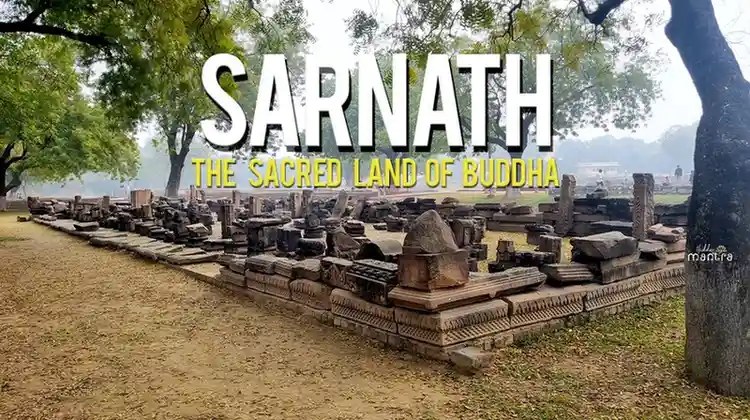
Located about 10 kilometers from Varanasi, Sarnath is one of the most sacred spiritual destinations in the world. It is here that Gautama Buddha delivered his first sermon after attaining enlightenment, setting the Wheel of Dharma in motion and laying the foundation of Buddhism.
Whether you are a traveler seeking meaning, a history lover, or someone simply looking to understand why Sarnath in Varanasi holds such deep global significance, this blog will walk you through its sacred past, spiritual importance, and why it remains a must-visit destination even today.
What You’ll Learn in This Blog
In this blog, we will take you on a journey through Sarnath’s rich spiritual, historical, and cultural heritage while explaining why Sarnath is one of the holiest places in Buddhism. By the conclusion of this blog, you will have gained knowledge about:
- The spiritual importance of Sarnath
- The historical events that took place here
- The meaning of Dhammachakra Pravartana
- How the Buddhist Sangha was formed
- The symbolism behind major Buddhist icons
- Key attractions in Sarnath
- The architectural and artistic heritage
- The spiritual experience for modern visitors
- Sarnath’s importance beyond Buddhism
- Practical travel guidance
Whether you are a spiritual seeker, history enthusiast, or traveler looking for inner calm, this blog will help you see Sarnath not just as a destination, but as a living spiritual journey.
Historical Background of Sarnath
Long before it became one of the most sacred sites in the world, Sarnath was a quiet and peaceful landscape deeply connected with spiritual seekers and sages.
Sarnath in Ancient Times
The history of Sarnath goes back to the 6th century BCE. After attaining enlightenment under the Bodhi Tree in Bodh Gaya (You can explore the deep spiritual importance of this sacred site in detail through this guide on the Bodh Gaya Temple), Siddhartha Gautama traveled to the Deer Park at Sarnath, seeking a quiet place to share his realization.
The serene environment made it perfect for reflection and teaching, far removed from political power or urban noise.
Buddha’s First Sermon
At Sarnath, Buddha spots his five old companions. He gathers them under a tree and begins speaking from the soul. Sitting beneath a tree, without ceremony or grandeur, he delivered a discourse that would forever change human spiritual thought.
This sermon introduced:
- The Four Noble Truths
- The Eightfold Path
At that moment, Buddhism transformed from an inner realization into a shared spiritual path.
Rise of Sarnath as a Buddhist Center
Centuries later, around 250 BCE, Emperor Ashoka rolled in, his heart turned from war to dharma after a bloody battle. Awed by this spot, he pours resources into stupas and towering pillars, turning Sarnath into a buzzing haven where monks from afar debate, meditate, and etch Buddha’s words into stone for generations to cherish
This is why Sarnath’s history is inseparable from the global spread of Buddhism.
Religious Significance in Buddhism
Just a visit and seeing monuments and ruins doesn’t give you that true spiritual identity, to truly understand why Sarnath in Varanasi holds such an unmatched place in Buddhist tradition, you need to look beyond all those structures.
As you stand in a land where Buddha’s wisdom first took form as spoken teaching, where a spiritual idea became a living path for humanity. You get to understand how every stupa, symbol, and silent pathway in Sarnath carries deep religious meaning, making it one of the holiest sites in Sarnath Buddhism. Here are the most important significances:
Dhammachakra Pravartana
- The phrase signifies the beginning of the Buddha’s teachings and their spread through Dharma.
- It marks the moment when Buddha gave his first sermon in Sarnath.
- Here, he introduced the Four Noble Truths and the Eightfold Path.
- This event shared Buddha’s wisdom with the world for the first time.
- In Sarnath Buddhism, it is considered as sacred as enlightenment itself.
- Visitors to Sarnath in Varanasi still feel the spiritual energy of this moment.
Formation of the Buddhist Sangha
- The Buddhist Sangha was formed in Sarnath after Buddha’s first sermon.
- Buddha’s five disciples became the first monks of Buddhism.
- This was the beginning of organized Buddhist practice.
- Buddhism grew from one teacher’s wisdom into a shared spiritual tradition.
- From Sarnath, Buddhism spread across India and many Asian countries.
- For pilgrims, Sarnath in Varanasi symbolizes unity, discipline, and spiritual community.
Symbolism of the Wheel of Dharma
- The Wheel of Dharma (Dharmachakra) is a key symbol of Sarnath.
- Its eight spokes represent the Eightfold Path taught by Buddha.
- This path guides right living, mindful action, and inner balance.
- The symbol appears throughout Sarnath in Varanasi on stupas, temples, and in museums.
- It reminds visitors to live with ethics, awareness, and compassion.
- The Wheel reflects Sarnath’s role as the place where Buddha’s teachings began and continue to inspire peace worldwide.
Major Attractions in Sarnath
The major attractions in Sarnath are deeply connected to Buddha’s journey and teachings. These sacred landmarks reflect the peace, wisdom, and transformation that began here and spread across the world.
Dhamek Stupa
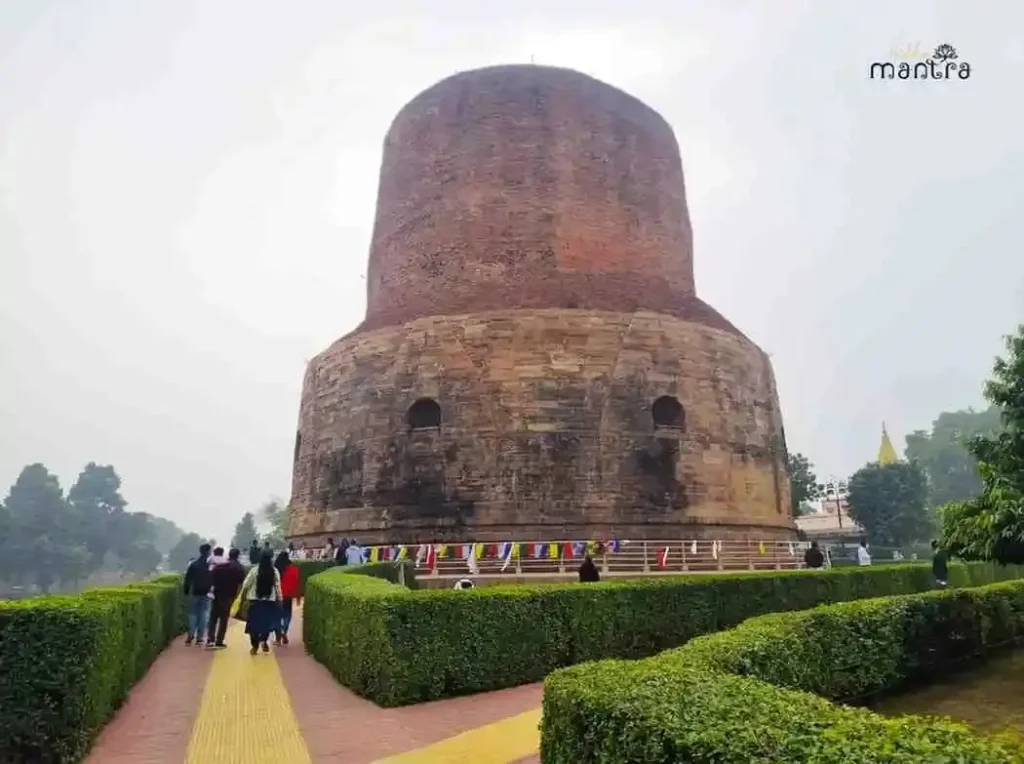
Sarnath contains the Dhamek Stupa, which is the most well-known and sacred building at this location. The location is that of the place where the Buddha delivered his first sermon; hence, the Dhamek Stupa becomes a focal point of the Buddha’s first sermon. The huge circular form of the Dhamek Stupa and the peacefulness of the surroundings create an intense sense of tranquillity and peace for many.
Chaukhandi Stupa
The Chaukhandi Stupa symbolizes the point at which Buddha came together with his five followers before he gave his first sermon. It has a brick base and has an octagonal tower constructed during the Mughal period, combining elements of both Buddhist and Islamic history.
Visitors to the Stupa will experience the first connection between humans that enabled the transmission of Buddhism throughout the world.
Ashoka Pillar Ruins
The Ashoka Pillar reflects the deep respect the Emperor Ashoka had for the Buddha and his teachings. Although today, only the Pillar’s base can be found at this location, at one time, the Pillar there also held the Lion Capital, which is now the National Emblem of India.
Through its historical significance, the site of Sarnath provides a strong representation of Sarnath’s influence not only on religion, but also on the broader cultural identity of India.
Mulagandha Kuti Vihar
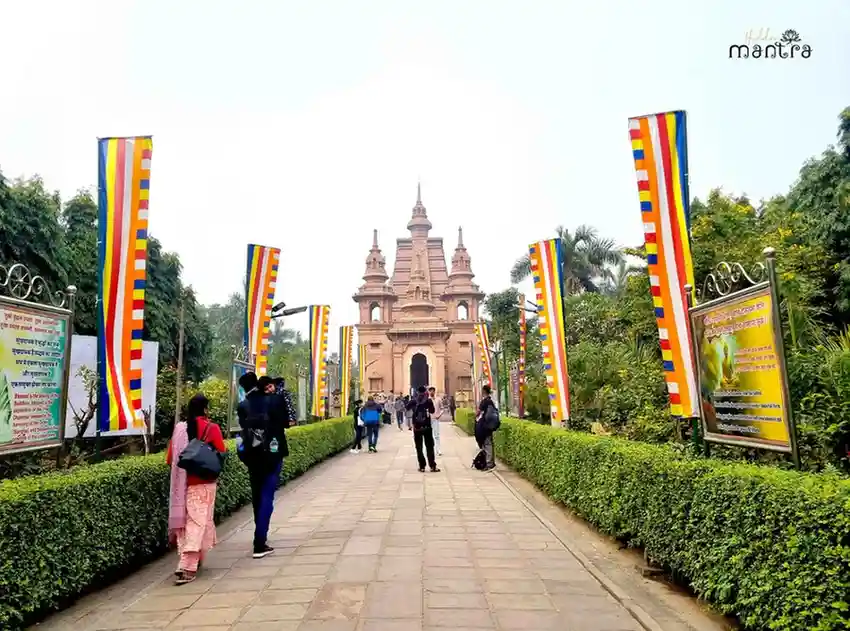
The Mulagandha Kuti Vihar is a present-day temple of Buddhism, which serves as a means of preserving the religious traditions and ambiance of Sarnath. The mural paintings inside this temple depict the life of the Buddha in a beautiful, touching way.
In addition to being a refuge for meditation, it contains some of the most precious items related to Buddhism. Therefore, both devoted and contemplative pilgrims frequently visit this temple.
Sarnath Archaeological Museum
Anyone visiting India with a historical vision should make sure to stop at the Sarnath Archaeological Museum. Located near the site of Buddha’s first-ever sermon, this museum features the original Lion Capital of Ashoka and numerous ancient sculptures of Buddha’s form, as well as carvings and stone inscriptions that were uncovered through archaeological digs.
Visiting this museum provides a complete view to visitors as to how Sarnath has influenced the creation of Buddhist Art and Spirituality.
Architecture and Art Heritage
Sarnath holds a special place in the history of Indian art and architecture, as it was here that Buddhist thought found a lasting visual form.
A variety of different factors led to the development of Sarnath’s architectural monuments and sculptures, such as Religious Beliefs of the time, Royal Patronage, and the Artistry of Their Artisans. Today, these artistic examples are still representative of the Cultural Identity of India.
Mauryan and Gupta Influences
During both the Mauryan and Gupta periods, Sarnath was at its most productive artistically. In the Mauryan period, architects began to use stone for buildings instead of wood because stone provided a strong foundation for a building.
As a result, the Mauryan period focused on creating durable and straightforward buildings that had functional clarity as well as moral clarity rather than excessive detail. Subsequently, the style developed into a more harmonious, elegant, and graceful form by the Gupta Period.
Designers, sculptors, and builders of this era created works that communicated the principles of balanced proportions, peacefulness, spirituality, discipline, meditation, and a tranquil harmony with nature.
Buddhist Sculptures and Relics
The sculptural heritage of Sarnath is among the finest in India. The images depicting the Buddha produced here demonstrate calmness and serenity, having facial expressions that exude no sense of anger or violence; instead, they exhibit gentle, lowered eyes along with robes that are composed of smooth, flowing materials.
Sarnath’s sculptural tradition reflects a state of enlightenment, and the sculpture’s emphasis on calmness rather than physical strength. There are numerous examples of Buddha relics, stupas, and carved panels illustrating scenes from Buddha’s life and teachings placed in tourist locations to serve as both sacred objects and educational tools.
Lion Capital of Ashoka
The Lion Capital of Ashoka represents the predominant historical aspect of Sarnath. The Lion Capital has four lions carved from smooth sandstone placed back-to-back. These lions represent moral authority, vigilance, and strength.
Emperor Ashoka’s sculpture is considered a reflection of his adherence to dharma. It symbolizes his belief that the foundation for governing should be based upon justice and kindness, not violence.
In addition, the continued use of the Lion Capital as India’s national emblem demonstrates how relevant the concepts of dharma are today, and it connects modern methods of ruling with India’s historical heritage.
Spiritual Experience for Visitors
The tranquility and pureness of Sarnath’s environment permit people to perceive Buddhism not merely as a historical fact but also as a configuration that continues to exist today.
Meditation and Prayer Atmosphere
Sarnath is indeed distinguished from other busy pilgrimage sites through the exceptional degree of quietness that prevails within its bounds. Even with tourists in attendance, the atmosphere of the area remains calm and reflective. Visitors frequently make the effort to be in a proper position (e.g., close to a stupa) for meditation purposes. Additionally, the trees throughout Sarnath provide a great deal of shade during hot weather.
International Buddhist Temples
The city of Sarnath features numerous Buddhist Monasteries that have been constructed by various countries, including Thailand, Japan, Sri Lanka, Tibet, and Myanmar. Each Monastery has its own distinct architectural style, color scheme, and cultural tradition. As a Group, these Monasteries exemplify the Reach of Sarnath’s Spiritual Influence beyond the borders of India, and they remain a source of Unity for Buddhists everywhere.
Festivals like Buddha Purnima
Sarnath celebrates Buddha Purnima as its biggest festival. On this day, monks gather to chant, devotees will light lamps, and perform special ceremonies. The whole area takes on a very spiritual atmosphere where everyone seems to be devoted and respectful.
Sarnath Beyond Buddhism
In addition to its significance in Buddhism, Sarnath shows all aspects of diversity within India’s many religions as well as evidence of ongoing cross-cultural contact throughout history, which continues today, offering an ideal setting for learning about world culture through education.
Importance in Jainism
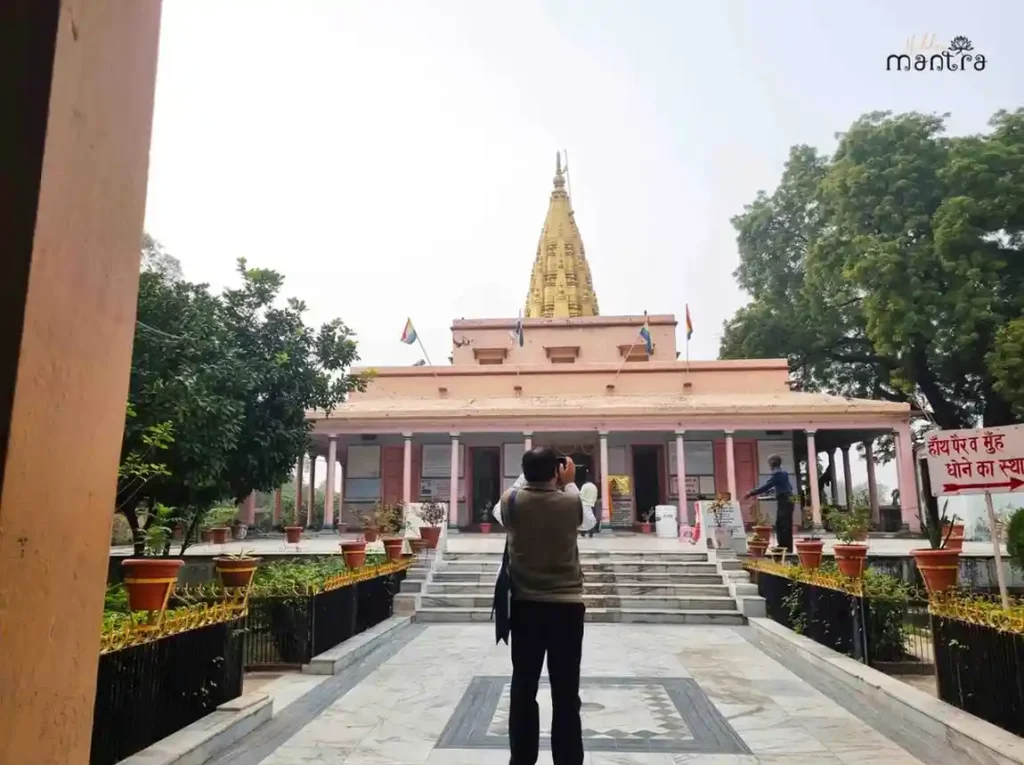
- Sarnath is associated with the Tirthankara Shreyansanath, number 11th in the Jain tradition.
- Followers of Jainism consider Sarnath a sacred place because of its link to the life and preaching of Shreyansanath.
- The association of Sarnath with all three of India’s major religions shows how Sarnath serves as a common place of worship for many Indian religions.
Cultural Diversity and Global Influence
- Sarnath in Varanasi has pilgrims and visitors from countries all over the world.
- There are many different languages, culture and traditions in the same sacred place.
- Diversity illustrates the worldwide dissemination of the concepts developed at Sarnath.
Educational and Archaeological Value
- Historians, archaeologists, and students recognize that Sarnath is an incredibly valuable resource in their studies.
- Through exploring its ancient ruins, inscriptions, and sculptures, it is possible to uncover much of India’s earliest history and art.
- What makes this site particularly unique is the tangible connection it provides to both historical events and the teachings contained within religious texts.
Best Time to Visit Sarnath
By learning about the climate of Sarnath during various times of year, tourists can better prepare for enjoyable, low-traffic visits to Sarnath and/or more spiritual events or festivals that may occur.
| Category | Time Period | Details |
| Seasonal Overview | October – March | The most comfortable months with pleasant weather make them ideal for sightseeing and exploring historical sites. |
| April – June | Summers can be hot, but early mornings and evenings are still suitable for visits and quiet walks around the monuments. | |
| July – September | The monsoon season brings fresh greenery and fewer crowds, though humidity and occasional rain may affect travel plans. | |
| Ideal Months for Travel | November – February | These months offer cool temperatures and a calm atmosphere, perfect for relaxed and peaceful exploration. |
| Special Festival Timings | April – May | Visiting during Buddha Purnima allows travelers to experience Sarnath at its most spiritually vibrant, with prayers and |
How to Reach Sarnath
Tourists or pilgrims visiting Sarnath do not have difficulty reaching this major Buddhist pilgrimage site from Varanasi, as Sarnath offers multiple transportation methods that are easy to access.
Connectivity from Varanasi
The distance between Varanasi’s city center and Sarnath is approximately 10 kilometers (6 miles), and the trip can generally be made in 30 to 40 minutes, although heavy traffic may extend the travel time. The road leading to Sarnath is well-maintained and heavily traveled by both pilgrims and tourists all year round.
Road, Rail, and Air Access
- By Road
Auto rickshaws, taxis, and app-based cabs will provide an easy, all-weather means of transport to Sarnath from Varanasi. Affordable local buses also run to Sarnath. Roads are in beautiful condition; therefore, the best way to get to Sarnath would be to travel by road.
- By Rail
Varanasi Junction is the closest large train station to Sarnath and stops in every major city in India. Taxis and auto rickshaws are available from the railway station to get to Sarnath.
- By Air
The nearest airport is Lal Bahadur Shastri International Airport, approximately 25 KM from Sarnath. The airport has frequent connections with major Indian cities. Taxis are also available at the airport for a direct ride to Sarnath.
Nearby Attractions
Several popular attractions are located close to Sarnath, making it easy to explore more of Varanasi during your visit. Such as:
Varanasi Ghats
Situated along the Holy River Ganga, these ghats represent the spiritual center of Varanasi, where visitors can experience daily worship and evening ceremonies (Ganga Aarti), as well as witness both ancient and modern customs. The ghats are approximately 12-14 km (about 30 minutes) away by car from Sarnath.
Banaras Hindu University
This is one of India’s leading educational institutions, known for its peaceful campus and strong connection to the country’s cultural and historical traditions. The university houses several temples, museums, and heritage spaces that reflect India’s rich academic legacy.
Ramnagar Fort
Ramnagar Fort lies along the east side of the Ganga River in the city of Varanasi, it exhibits what was once an important part of the royal family of Varanasi’s history via its museum, palatial buildings and scenic views over the river. The fort is approximately 18 kilometres from Sarnath and can be easily accessed via taxi or auto-rickshaw.
If you’re planning to explore more around Sarnath and Varanasi, there are many other remarkable places worth visiting. For a complete list of must-see sights and travel tips in the region, check out this guide on the Top Places to Visit in Varanasi.
Conclusion: A Timeless Spiritual Destination
More than just a stop on the way to Sarnath in Varanasi has a special intimacy about it that is both welcoming and personally engaging. As one of the four holy sites where Siddharta delivered his first sermon, Sarnath was a turning point in the path that he led, and continues to guide those seeking inner peace and understanding.
Walking through Sarnath, you do not just learn about the Buddha-you begin to feel his wisdom in the silence, the stupas, and the pathways where his teachings first took form. It reminds us that true peace begins within and grows stronger when shared with others.
For those seeking deeper insight into spiritual journeys and sacred places, Hidden Mantra and Hidden Mantra Blogs offer meaningful perspectives that help connect ancient wisdom with modern life, allowing Sarnath to become not just a memory but a step forward on the path of inner growth.
FAQ
Why is Sarnath considered the sacred land of Buddha?
Sarnath is sacred because this is where Buddha gave his first sermon after enlightenment. This moment marked the beginning of Buddhism and the sharing of his teachings with the world.
Where is Sarnath located in relation to Varanasi?
Sarnath is located about 10 kilometers northeast of Varanasi. It can be reached easily by road within 30–40 minutes.
What is the significance of the Dhammachakra in Sarnath?
The Dhammachakra symbolizes the moment when Buddha began teaching his path to freedom from suffering. Its eight spokes represent the Eightfold Path that guides right living and inner balance.
Which are the most sacred places to visit in Sarnath?
The most sacred sites in Sarnath include Dhamek Stupa, Chaukhandi Stupa, Mulagandha Kuti Vihar, and the Sarnath Archaeological Museum. These places are directly connected to Buddha’s life, teachings, and legacy.