Table of Contents
ToggleNavratri 2026 begins on Sunday, 11 October and ends on Monday, 19 October, with Vijayadashami (Dussehra) on Tuesday, 20 October. The nine colours for 2026 are orange, white, red, royal blue, yellow, green, grey, purple and peacock green, worn in that order from Day 1 to Day 9.
Navratri means “nine nights” in Sanskrit, and each night is dedicated to one of the nine forms of Goddess Durga, together called Navadurga. Devotees fast, pray, and take part in celebrations such as Garba and Dandiya, and Durga pandals are decorated across the country. The festival honours the triumph of good over evil, remembered through Durga’s victory over the buffalo demon Mahishasura.
Nine Colours of Navratri: A Day of Spirituality and Devotion
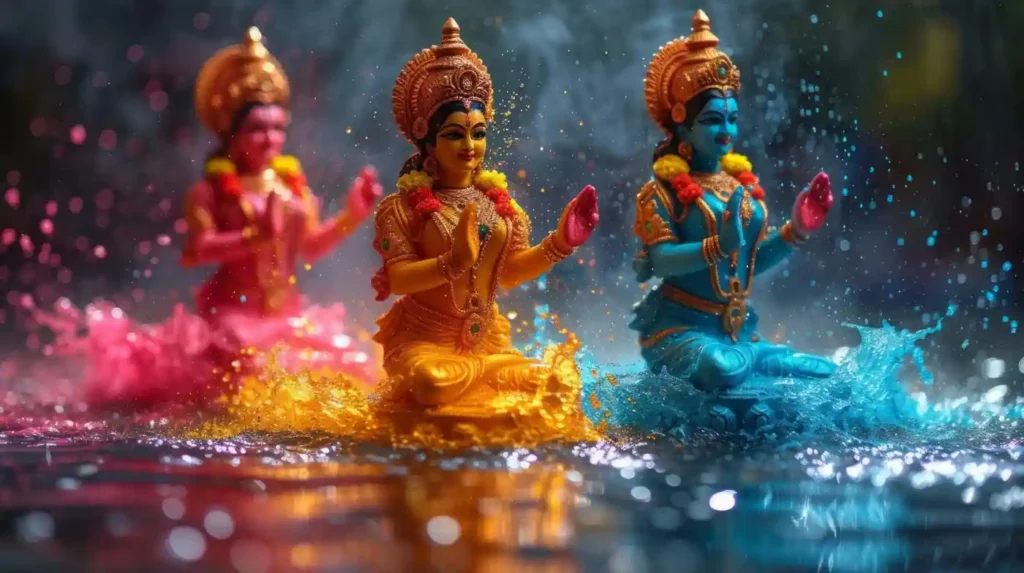
Navratri is one of the celebrating festivals of Hindus. Dedicated to the worship and spiritual experience of Goddess Durga for nine days and nine nights, this festival is a grand celebration of devotion and culture. Each day is associated with a specific colour. These colours have special spiritual and psychological relevance.
Why Do the Navratri Colours Change Every Year?
The order of the Goddess does not change. Shailaputri is always worshipped on Day 1 and Siddhidatri on Day 9. The colours are different. They follow the weekday on which Navratri begins, so the sequence shifts from year to year. In 2025 the festival began on a Monday and opened with white. In 2026 it begins on a Sunday, so the sequence opens with orange. Wearing the colour of the day is a popular modern custom rather than a scriptural rule, and practices vary between communities and regions. What matters most is the devotion offered to the Goddess.
Navratri 2026 Colours: Day-Wise List and Meaning
Navratri is one of Hinduism’s grandest festivals. It involves nine days and nine nights of worship of the many forms of Goddess Durga. Each day is connected to a certain color, which is much more than decoration or clothing, being a representation of spirituality, devotion, strength, and peace. It is thought that wearing the designated colour on each day of Navratri gives the devotees divine strength, enthusiasm, and confidence. These nine colours alongside the nine forms assures the spiritual significance of Navratri is maximized.
Day 1 (11 October): Orange – Maa Shailaputri
Orange stands for energy, warmth and courage. The first day honours Shailaputri, the daughter of the Himalayas, who rides the bull Nandi and holds a trident and a lotus. Ghatasthapana, the installation of the sacred pot that begins the nine days of worship, is performed on this day.
Day 2 (12 October): White – Maa Brahmacharini
White represents purity, peace and calm. Brahmacharini embodies penance and devotion, and she is shown holding a rosary and a water pot. Devotees pray to her for self-discipline and steadiness of mind.
Day 3 (13 October): Red – Maa Chandraghanta
Red symbolises strength, passion and auspiciousness. Chandraghanta takes her name from the crescent moon shaped like a bell on her forehead, and she rides a tiger. She is worshipped for courage and protection from fear.
Day 4 (14 October): Royal Blue – Maa Kushmanda
Royal blue signifies depth, calm and prosperity. Kushmanda is believed to have created the universe with her gentle smile. She is worshipped for health, abundance and a bright outlook.
Day 5 (15 October): Yellow – Maa Skandamata
Yellow brings joy, optimism and brightness. Skandamata is the mother of Skanda (Kartikeya), and she is shown seated on a lotus with the child in her lap. She represents the nurturing, protective side of the Divine Mother.
Day 6 (16 October): Green – Maa Katyayani
Green stands for growth, renewal and harmony. Katyayani is the warrior form of Durga, born to the sage Katyayana, and she is the form associated with the slaying of Mahishasura. Many devotees pray to her for courage and for obstacles to be removed.
Day 7 (17 October): Grey – Maa Kalaratri
Grey represents balance, restraint and humility. Kalaratri is the fiercest form of the Goddess, dark in appearance, and she destroys ignorance and fear. Her worship is associated with protection from negative forces.
Day 8 (18 October): Purple – Maa Mahagauri
Purple is associated with dignity, ambition and spiritual strength. Mahagauri is fair and serene, and she is the form who gives purity and peace. This day is Durga Ashtami, and in many homes it is marked with special puja and Kanya Pujan.
Day 9 (19 October): Peacock Green – Maa Siddhidatri
Peacock green signifies individuality, compassion and freshness. Siddhidatri is believed to grant spiritual accomplishments and fulfilment, and she is shown seated on a lotus. The ninth day is Maha Navami and closes the nine days of worship.
Conclusion: The spiritual message conveyed by the colours of Navratri
Every colour of Navratri has significant spiritual meaning that carries representations of strength, purity, growth, love, and so forth. These colours serve as guiding principles for those engaging in the nine-day spiritual adventure, inspiring positivity, inner strength, and journey with the divine. So, it is not simply about the rituals of Navratri; it is a positive celebration of colours that fosters spiritual growth and transformation in a person’s life. For more cultural and spiritual insights, explore our blog at Hidden mantra
Also Read: Navratri fasting diet plan : How to Stay Energized for Nine Nights of Fitness Tips
Frequently Asked Questions About Navratri Colours
What is the colour of Navratri Day 1 in 2026?
The Day 1 colour for Navratri 2026 is orange. Navratri begins on Sunday, 11 October, and Maa Shailaputri is worshipped on this day.
What are the nine colours of Navratri 2026?
The nine colours are orange, white, red, royal blue, yellow, green, grey, purple and peacock green, from Day 1 to Day 9.
Why do the Navratri colours change every year?
The colour sequence follows the weekday on which Navratri starts, so it shifts each year. The order of the nine Goddess forms stays the same.
Do I have to wear the Navratri colours?
No. Wearing the colour of the day is a popular custom, not a requirement. The heart of Navratri is devotion to Goddess Durga, and practices differ across communities and regions.
When does Navratri 2026 start and end?
Navratri 2026 starts on 11 October and ends on 19 October, followed by Vijayadashami on 20 October.