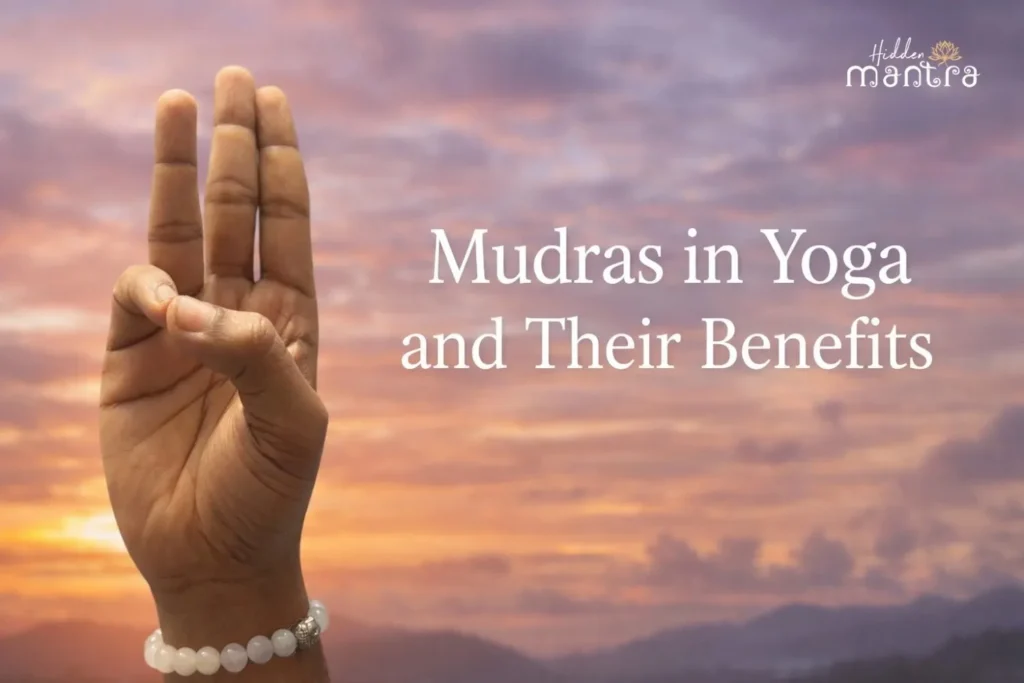
In Yoga, Mudras refer to a hand gesture that directs the body’s energy and encourages physical health, mental clarity, and emotional balance. They have been used since ancient times in Yogic and Ayurvedic cultures; they affect how Prana (the vital energy of life) moves through the body’s energy channels. Each of the five fingers corresponds to one of the five elements, and certain finger combinations are used to achieve harmony between the body and the mind.
Mudras have been used extensively in yoga. Mudras can be practiced anywhere and don’t require special equipment like other postures do. Mudras have very similar healing energies to postures.
This Guide is a comprehensive overview of the most commonly used Yoga Mudras and their benefits. It contains pictures of all the main mudras along with detailed instructions on how to use them correctly and consistently.
How Mudras Work
Mudras work based on the concept that the human body can be viewed as an energetic system and is composed of many microscopic energy channels called nadis throughout the body. The nerve endings in the human hands contain highly developed neuro-muscular pathways, which link the hands (and feet) to the specific areas of the brain and the major organs. As well as directing prana through the hands by creating touch or pressure between specific fingers.
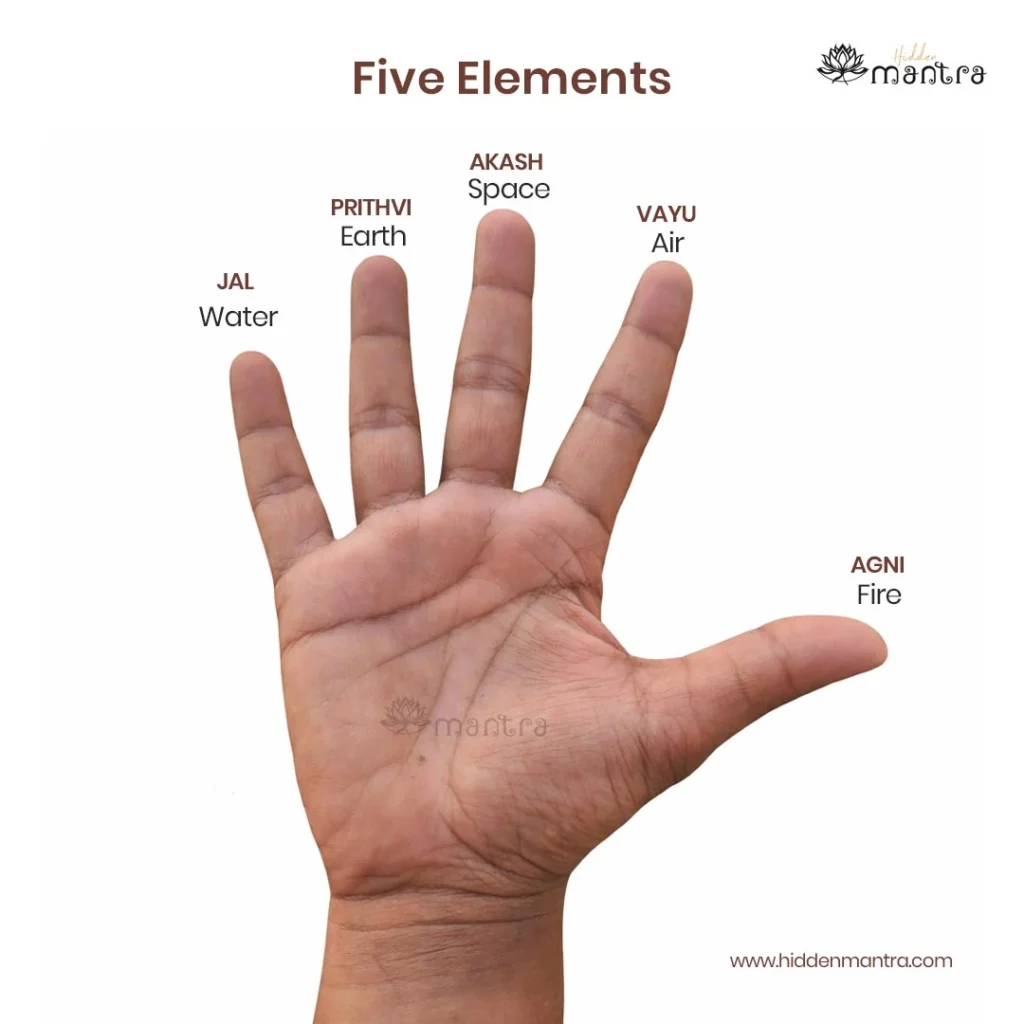
Each finger represents one of the five elements:
- Thumb – Fire (Agni)
- Index – Air (Vayu)
- Middle – Space (Akash)
- Ring – Earth (Prithvi)
- Little – Water (Jal)
When the balance of these elements becomes imbalanced, it can cause discomfort both emotionally and physically. Mudras are used to naturally bring all the elements back into balance in the body.To use Mudras effectively, get comfortable sitting in a cross-legged position on the floor, or sitting on a chair with a straight back. Gently lower your shoulders and release tension throughout your body.
Close your eyes and begin breathing with a slow and focused breath pattern. It is often recommended to use Mudras for 15–30 minutes at least once a day, either by themselves or in conjunction with other forms of yoga (pranayama, meditation) to get the maximum benefit.
General Benefits of Practicing Mudras
Some of the key benefits of incorporating mudras into daily practice include:
- Reduces stress and anxiety
- Improves concentration and mental clarity
- Improves emotional balance and mindfulness
- Boosts energy levels and vitality
- Supports digestion, circulation, and respiratory health
- Helps manage specific conditions like blood pressure and asthma
Easy to practice anytime, anywhere
List of Mudras
This list introduces essential yoga mudras that are easy to practice and can be incorporated into daily meditation and wellness routines.
1. Gyan Mudra
Gyan Mudra is formed by joining the tip of the index finger with the thumb while keeping the other fingers extended. It is known as the mudra of knowledge and wisdom. Regular practice improves concentration, memory, and mental clarity while calming the mind and reducing stress.
2. Aakash Mudra
Aakash Mudra is performed by touching the tip of the middle finger to the thumb, This mudra balances the space element in the body. It helps reduce heaviness, supports detoxification, improves digestion, and promotes mental openness and lightness.
3. Vayu Mudra
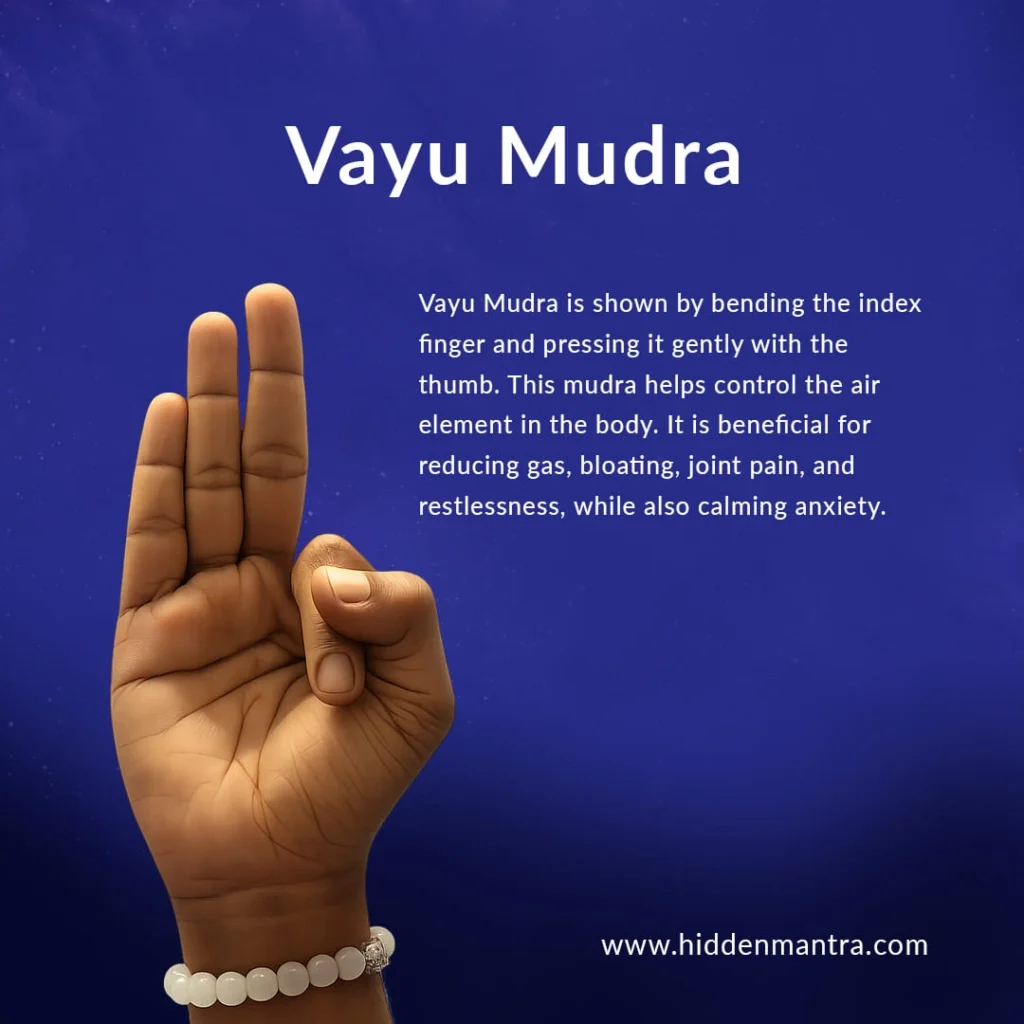
Vayu Mudra is shown by bending the index finger and pressing it gently with the thumb. This mudra helps control the air element in the body. It is beneficial for reducing gas, bloating, joint pain, and restlessness, while also calming anxiety.
4. Apan Mudra
Apan Mudra is formed by joining the tips of the thumb, middle finger, and ring finger. It is known for its cleansing effect on the body. This mudra supports digestion, detoxification, and proper elimination of waste.
5. Surya Mudra
Surya Mudra is practiced by folding the ring finger and pressing it with the thumb. Practicing this mudra helps awaken the fire element within the body. It helps boost metabolism, improve digestion, and support healthy weight management.
6. Varun Mudra
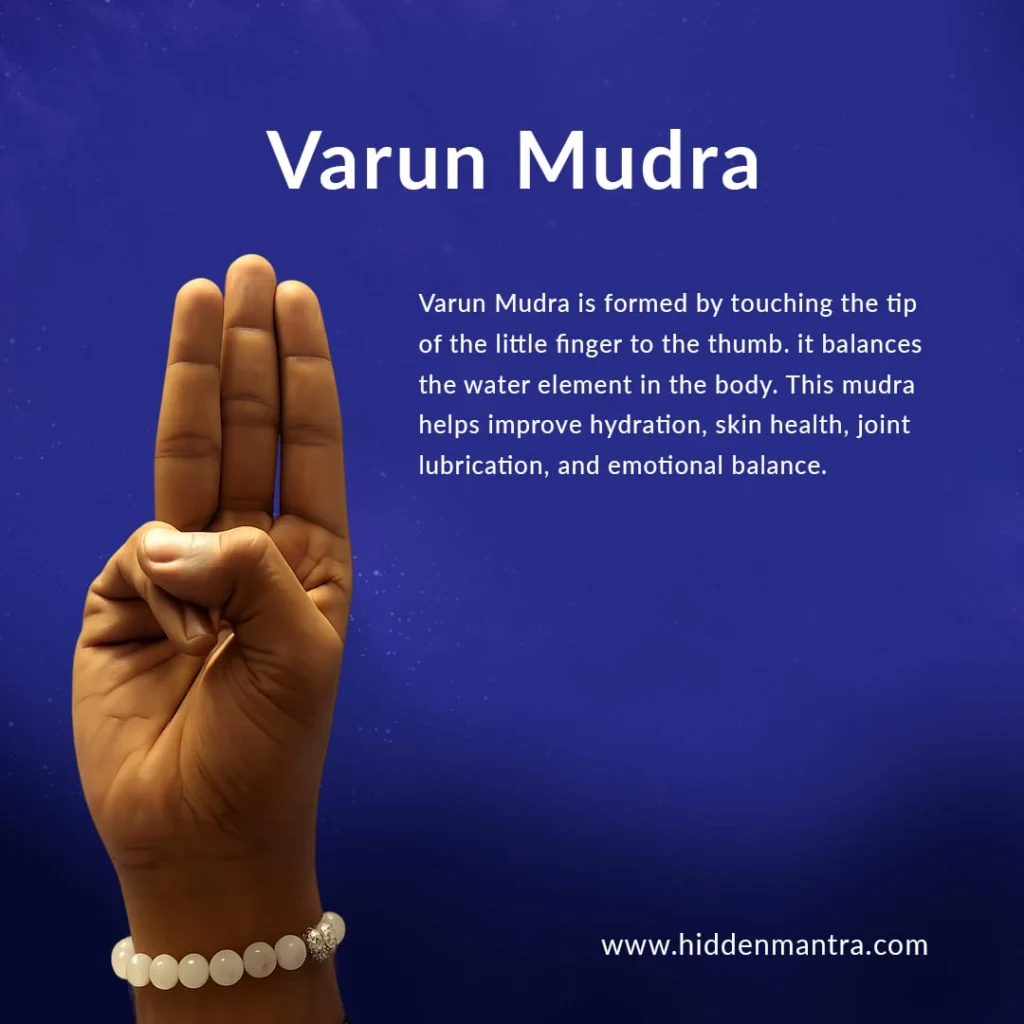
Varun Mudra is formed by touching the tip of the little finger to the thumb. it balances the water element in the body. This mudra helps improve hydration, skin health, joint lubrication, and emotional balance.
7. Shunya Mudra
Shunya Mudra is performed by bending the middle finger and pressing it with the thumb. This mudra reduces excess space element in the body. It is commonly practiced to relieve ear problems, dizziness, and a sense of emptiness or imbalance.
8. Apana Vayu Mudra
Apana Vayu Mudra brings together elements of the Apana and Vayu hand gestures. It supports heart health by improving circulation and calming the nervous system. This mudra is often practiced to strengthen the heart and maintain emotional stability.
9. Asthma Mudra
Asthma Mudra is formed by interlocking the fingers and bending the middle fingers inward. This mudra helps improve breathing capacity. It is beneficial for people with asthma, bronchitis, and other respiratory issues.
10. Indra Mudra
Indra Mudra is practiced by extending the index fingers while folding the remaining fingers. This mudra enhances focus, determination, and mental strength. It is believed to boost confidence and inner power.
11. Udhan Mudra
Udhan Mudra is performed by interlocking the fingers and pointing the thumbs upward. This mudra supports speech, memory, and self-expression. It also helps uplift energy and mental clarity.
12. Yoga Mudra
Yoga Mudra, represents a symbolic yogic hand gesture used during meditation and practice. It helps deepen awareness, balance the mind and body, and enhance the overall benefits of yoga and mindfulness.
Conclusion
Mudras in yoga are simple yet profound tools for holistic well-being. By consciously using hand gestures, you can influence your energy flow, improve physical health, calm the mind, and enhance emotional stability. From Gyan Mudra for concentration to Vayu Mudra for digestion and Apan Vayu Mudra for heart health, each mudra serves a unique purpose.
Mudras work best when practiced on a regular basis. While practicing mudras for only a few minutes a day can produce results over time, consistent daily use is the most effective way to develop your understanding of mudras. Even if you are new to yoga, or you have been practicing for many years, you will find that incorporating mudras into your meditation, breathing exercises, or daily routines is a simple and effective way to enhance both your physical and mental health.
If you found this guide helpful, bookmark it and begin your journey toward balance, awareness, and wellness through yoga mudras.
FAQS
What is yoga mudra and its benefits?
In yoga, mudras represent gestures to convey a particular meaning, which can be used to direct energy within the body to become centred, find balance with our vital energies, and assist us with finding physical and mental well-being.
Which mudra is very powerful?
Mahā Mudra is the most powerful gesture in yoga practice to awaken the vital energies (prana) for balance and well-being, both physically and spiritually.
How many mudras are there in yoga?
Many classical yoga texts elaborate on approximately 25 primary mudras. Within each tradition, there are various forms of mudras or adaptations.
Which mudra is best for stress and anxiety?
Gyan Mudra is the most effective gesture for managing stress and anxiety. This gesture will allow the individual to experience stillness, develop focus, and achieve inner peace and relaxation.