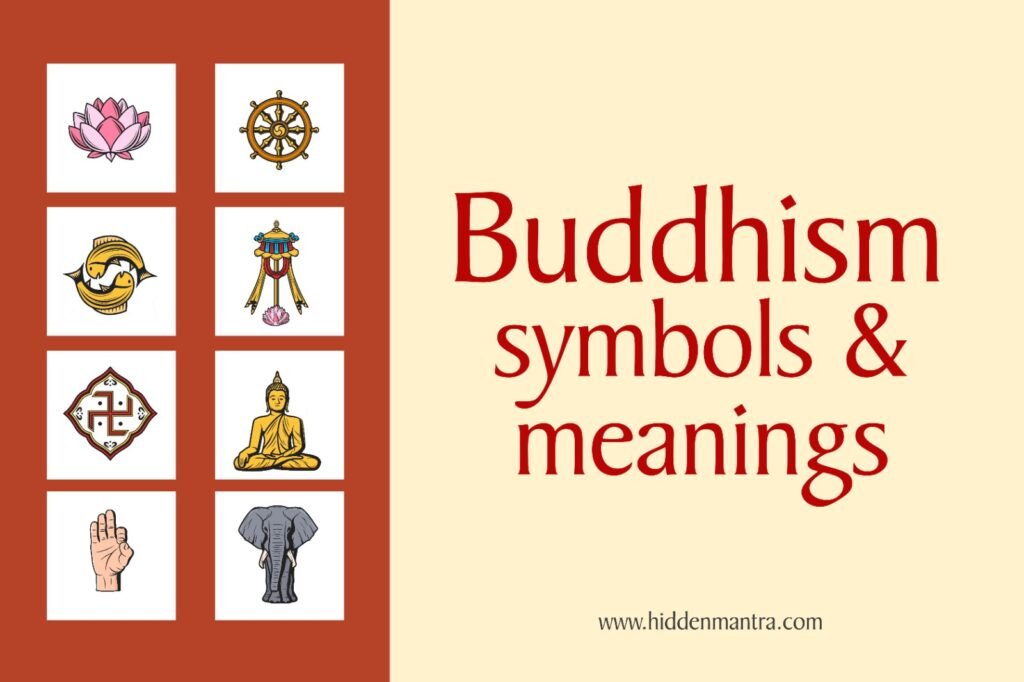
Buddhism is a spiritual tradition built on mindfulness, compassion, and the path to enlightenment. Its symbols are not decoration- they are visual teachings, each one encoding a specific idea from the Buddha’s philosophy so it can be recognized, remembered, and passed on without words., showing calm life and inner peace from a simple perspective. Buddhism consigns with varies symbols and customs, Symbols that presented in Buddhism treats our eyes as visual aspects and alarm of the teachings, meditation, and represent the valued spiritual concepts.
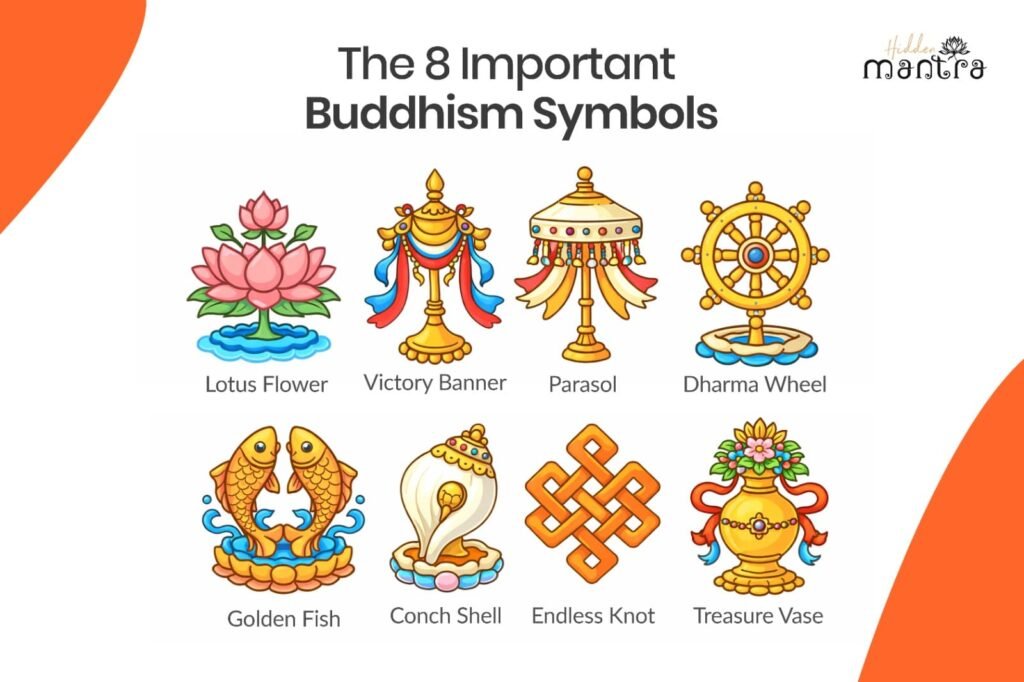
The standard Eight Auspicious Symbols in Buddhism are the Lotus Flower, Victory Banner, Parasol, Dharma Wheel, Golden Fish, Conch Shell, Endless Knot, and Treasure Vase, widely shown in art and ritual to remind followers of key teachings. There are few more symbols that is presented in Buddhism they are Bodhi Tree, Stupa, Bell (Ghanta), Mudras (Dharmachakra Mudra), Swastika, Flaming Pearl, Triratna (Three Jewels), Vajra , Om Mani Padme Hum, Deer. These symbols and meditation represents a calm feel over.
The 8 Important Buddhism Symbols and meanings
The Eight Auspicious Symbols of Buddhism represent the path to enlightenment and a life guided by wisdom, compassion, and mindfulness. Each symbol carries a deep spiritual message, reminding us of the Buddha’s teachings and inner transformation. Together, they inspire peace, balance, and freedom from suffering in daily life.
1. Lotus Flower
As the characteristics of lotus, it grows in dirty and muddy water but remains so pure, symbolizing the capability to rise above difficulties and achieve spiritual enlightenment.
2. Dharma Wheel (Dharmachakra)
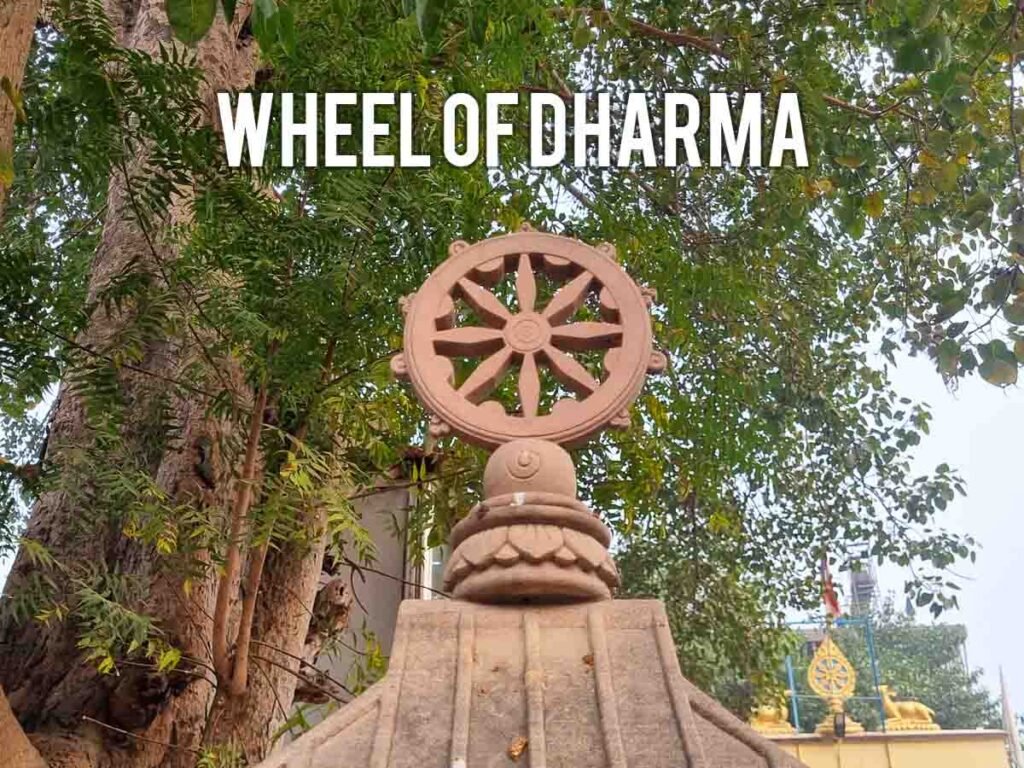
The wheel completely represents the path to enlightenment and the lessons taught by the Buddha.
The eight spokes symbolize the Eightfold Path, which guides followers toward ethical living, wisdom, and mental discipline.
3. Parasol (Chatra)
Parasol Represents a valid spiritual guidance from being suffering, harm, and ignorance. Often presented as a royal symbol of dignity and honour in Buddhism.
4. Golden Fish
Traditionally shown as a pair of fish, it symbolizes freedom from earthly constraints and the abundance of happiness and fertility. Inspired by fish swimming freely in water, it also conveys spiritual liberation.
5. Conch Shell
Represents the melodious sound of Dharma flowing wisdom far and wide. The right-turning conch is particularly revered as it echoes auspicious sounds.
6. Endless Knot
A representation of fulfilling peace and the interconnectedness of all things. Symbolises compassion and wisdom on the path to enlightenment.
7. Victory Banner (Dhvaja)
Completely Denotes the victory of wisdom over evil forces like ignorance, greed, and hatred. It is also linked to the Buddha’s triumph over the temptress Mara.
8. Treasure Vase
Represents inexhaustible spiritual and material wealth. It signifies the fulfillment of wishes and the teachings of generosity.
Other Buddha symbols
1. Bodhi Tree
Siddhartha Gautama became a truly enlightened under the revered fig tree. Which symbolises wisdom, enlightenment, and a link to the ultimate truth.
2. Stupa
A stupa is a dome-shaped structure that honors the Buddha’s life and teachings, reminding people of his journey to enlightenment and the cycle of life, death, and rebirth. Earth, water, fire, air, and space are the five elements that are represented by symbols in the design.
3. Bell (Ghanta)
A tool used in rituals and meditation, representing wisdom and the clear form of emptiness. Its sound is believed to source off negative energy.
4. Mudras (Hand Gestures)
Presentation on Buddha often include specific hand gestures, each with a unique meaning
o Dharmachakra Mudra: Turning out the wheel of Dharma.
o Bhumisparsha Mudra: Calling the Earth to feel Buddha’s enlightenment.
o Abhaya Mudra: Having Fearlessness and protection.
o Dhyana Mudra: symbolizes the Meditation and focus.
5. Swastika
In Buddhism, the swastika is an ancient sacred sign symbolizing good fortune and the eternal nature of Buddha’s wisdom, and it is often used at the start of scriptures to invite blessings. It is found at the beginning of texts to invoke blessings.
6. Flaming Pearl
A mystical symbol representing enlightenment, spiritual energy, and wisdom.
7. Triratna (Three Jewels)
The Triratna symbolizes the three central pillars of Buddhism:
o Buddha: The enlightened one.
o Dharma: The teachings of the Buddha.
o Sangha: The community of practitioners.
8. Vajra (Thunderbolt)
Represents indestructibility and powerful clarity in spiritual practice. Symbolizes compassion and wisdom as unbreakable forces.
9. Om Mani Padme Hum
A sacred mantra often potrayed in written or artistic form. Each element has a proper meaning, related to purifying the six realms of existence and attaining wisdom.
10. Deer
Buddha’s first sermon was in the Deer Park located at Sarnath. Involves in the symbol peace, mindfulness, and the spread of Dharma(truth).
Read more : Buddhist practice for inner peace
Buddhist Religious Clothing
Dress, Hats and rings
Buddhists, particularly monks and nuns, wear simple clothing reflecting their commitment to simplicity and releasing from material possessions. Monks typically wear saffron-colored robes, known as kaṣaya, which symbolize renunciation and humility.
Buddhists generally wear everyday clothing, but they may choose to dress modestly and avoid excessive ornamentation as a sign of respect for their faith. While specific dress codes vary across different Buddhist traditions and cultures, the emphasis remains on simplicity, practicality, and a focus on spiritual development rather than outward appearance.
Buddhist Symbol For Love
While Buddhism doesn’t have a singular symbol specifically for love, the concept is deeply connected with its teachings. The Lotus Flower is often associated with love, representing the values purity and enlightenment. The Endless Knot symbolizes love, representing the connection of all things and the nature of compassion. This lead everyone to feel blissful.
Whole Buddhism consists with positivity, as like Hidden mantra is a place where positivity and culture meets. Follow Hidden mantra blogs for related contents.
Read more : Buddha about Love
Conclusion
Buddhism teaches us to embrace symbols and practices that inspire mindfulness, compassion, and spiritual growth. These sacred symbols guide us toward a life of positivity and enlightenment.
Hidden Mantra celebrates these teachings with rich cultural insights. Explore more blogs like Buddha Quotes and Peace Quotes to deepen your understanding and find daily inspiration.
FAQ
What are the main symbols of Buddhism?
Common symbols include the Lotus, Dharma Wheel, and Buddha image. They represent purity, wisdom, and awakening. Each symbol reflects an aspect of the spiritual path.
What are the 8 Buddhist symbols?
The Eight Auspicious Symbols (Ashtamangala) are the Lotus Flower, Dharma Wheel, Parasol, Golden Fish, Conch Shell, Endless Knot, Victory Banner, and Treasure Vase. Each represents a specific quality on the path to enlightenment, from purity to spiritual victory.
What are the 8 pillars of Buddhism?
They commonly refer to the Noble Eightfold Path. These principles support ethical and mental development. They guide practitioners toward enlightenment.
What does the lotus flower symbolize in Buddhism?
The lotus symbolizes spiritual awakening. It grows rooted in mud but rises to bloom unstained above the water, representing the mind’s ability to reach enlightenment despite worldly suffering.
Is the swastika a Buddhist symbol?
Yes. In Buddhism the swastika (manji) is an ancient symbol of good fortune, eternity, and the Buddha’s footprints, used for over 2,000 years before its 20th-century political misappropriation in the West. It remains sacred and unrelated to that later use.