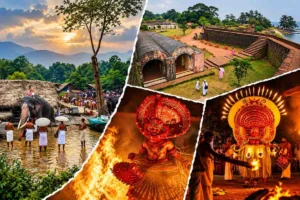
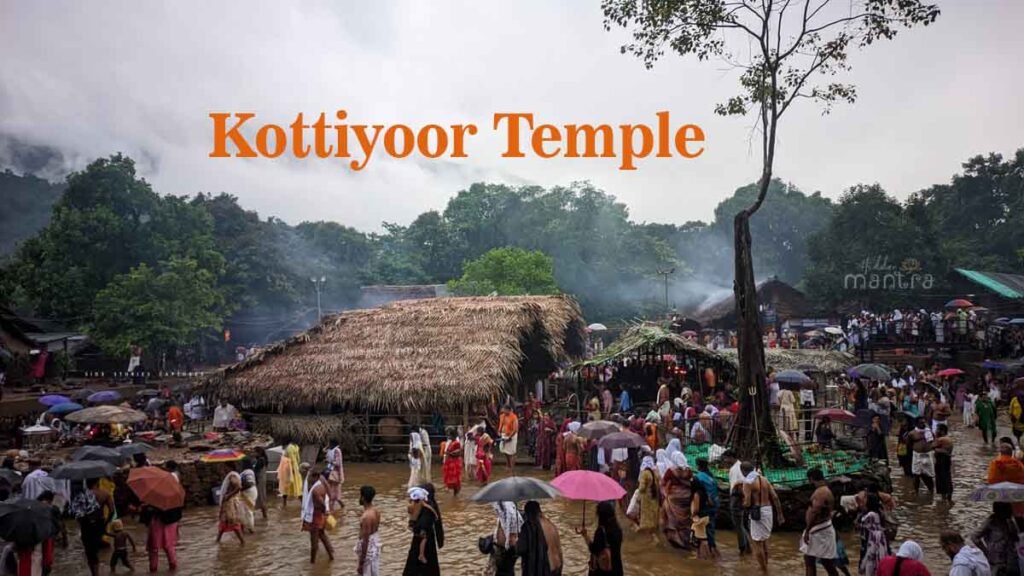
The Bavali River feels cold at dawn. Bare feet touch smooth stones worn soft by thousands of pilgrims, while the forest closes in on both sides and a small thatched shrine slowly appears through mist and rain.
Kottiyoor Vysakha Mahotsavam 2026 begins here, not inside a temple but inside a river, where faith moves with water and footsteps. In 2026, the festival runs from May 23 to June 24, drawing devotees into one of Kerala’s most powerful open-air Shiva traditions, where every crossing of the Bavali feels like a step into myth itself.
The Sacred Twin Shrines of Kottiyoor Temple
Kottiyoor temple is known as Dakshina Kasi or “The Varanasi of the South” for good reason. Kottiyoor is comprised of two opposite-facing shrines: Ikkare Kottiyoor, which is the permanent temple on the western bank of the Bavali River, and Akkare Kottiyoor, which lies on the western bank in the forest, and is the seasonal shrine.
The temple is tied to one of the most profound stories of Hindu mythology: the Daksha Yaga. Supposedly, Sati Devi, wife of Lord Shiva, induced immolation in the audience on and for the audience of her father Daksha, who had slighted her as his daughter. The events that unfolded were pure cosmic chaos, the wrath of Lord Shiva, and subsequent divine redemption.
Kottiyoor Vysakha Mahotsavam 2026 — Official Festival Schedule
The Vysakha Mahotsavam is unlike any temple festival celebrated in India. It is held annually in May–June, and in 2026, the festival period is expected to run from May 29 to June 25, 2026, at the Akkare Kottiyoor shrine. Traditional rituals such as Neyyattam and Bhandaram Ezhunnallathu occur early in the festival period as part of the 28-day cycle of ceremonies.
The rituals of Kottiyoor follow the Malayalam Panchangam calendar, and each ceremony unfolds in a precise sequence that has remained unchanged for generations. Unlike many temple festivals in Kerala, every ritual here is deeply tied to the landscape — river crossings, forest pathways, monsoon rain, and open-air worship all form part of the experience.
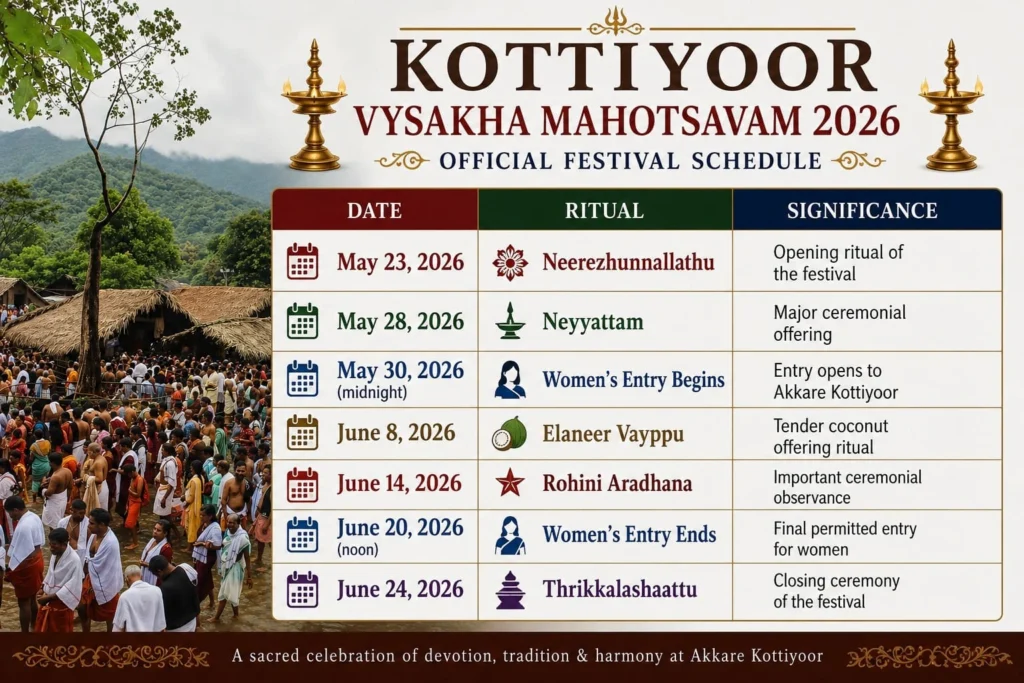
The schedule below reflects the official 2026 calendar released by the Kottiyoor Devaswom Board. Final ritual timings may change slightly based on temple administration announcements, so verify before travel.
| Date | Ritual | Significance |
| May 23, 2026 | Neerezhunnallathu | Opening ritual of the festival |
| May 28, 2026 | Neyyattam | Major ceremonial offering |
| May 30, 2026 (midnight) | Women’s Entry Begins | Entry opens to Akkare Kottiyoor |
| June 8, 2026 | Elaneer Vayppu | Tender coconut offering ritual |
| June 14, 2026 | Rohini Aradhana | Important ceremonial observance |
| June 20, 2026 (noon) | Women’s Entry Ends | Final permitted entry for women |
| June 24, 2026 | Thrikkalashaattu | Closing ceremony of the festival |
Ritual in the Wild: Devotion in Nature’s Lap
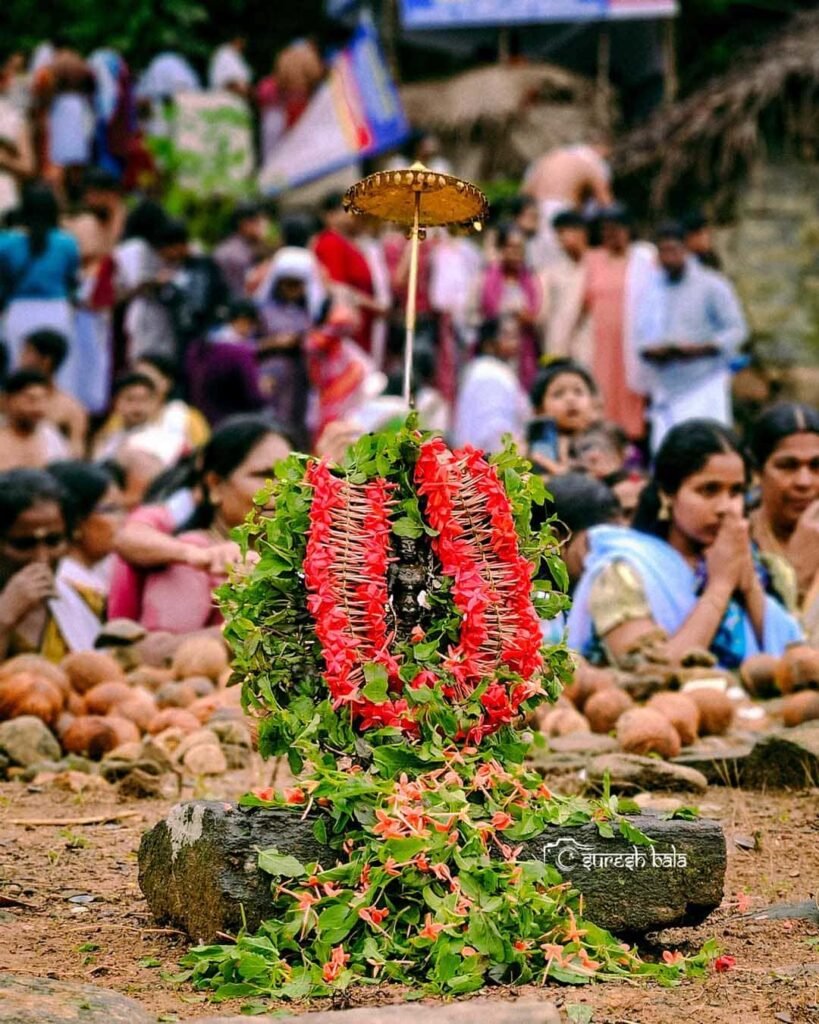
What makes Kottiyoor unique is its raw and aboriginal expression of worship. This Akkare shrine does not consist of a ceiling, a stone sanctum, or any walls. The deity, a Swayambhu Shiva Linga, sits on a stone slab and has no mentionable boundary other than the pond enclosing the relic. Worshippers have to ford the Bavali River on foot and cross the river to enter this forest shrine, thus enacting a ritual that feels at once pre-civilized and supremely civilized.
During these 27 days, the permanent temple at Ikkare Kottiyoor, with its stone sanctum, roof, and walls, stays closed, and no pujas are held, allowing the entire spiritual attention to remain focused on the forest rituals.
The festival is a coming together of Shaivist, Vaishnavist, and Shakteya traditions, which is a rare combination of multiple strands of Hindu spirituality. The puja is performed with intensity, kindness, and community while conducting the puja to emphasize the space as extraordinary and the place as sacred.
Also read: Top Spiritual Destinations In India That You Must Visit In
Crossing the Bavali — The River Is Part of the Ritual
Nobody arrives at Akkare Kottiyoor casually. The pilgrimage begins at the riverbank, where devotees leave their footwear in long wooden racks before stepping into the Bavali River barefoot. The first sensation is always the same – cold water rushing around your ankles, and beneath it, smooth stones polished by generations of pilgrims making this crossing before sunrise.
The river comes down from the forested Wayanad ghats, flowing through medicinal herbs and dense wilderness before reaching Kottiyoor. Many devotees still cup the water in their hands and drink from it, believing the river carries the healing properties of the forest itself.
Halfway across, the world changes. The sounds of buses and crowds fade behind you. Ahead lies forest, rain, smoke from oil lamps, and the temporary shrine rising quietly beneath the trees. During monsoon downpours, devotees often stand before the open-air Shiva Linga completely drenched. Locally, the rain is not seen as weather at all, but as Shiva’s grief for Sati still falling over Kottiyoor.
At Kottiyoor, the river crossing is not the path to worship. It is worship.
Odapoo – What the Sacred Prasadam of Kottiyoor Means
Among all the rituals and offerings of Kottiyoor Temple, nothing is more visually unforgettable than the Odapoo. Long white tassels made from bamboo or reed fibre sway gently in the hands of departing pilgrims, looking almost like flowing strands of silver-white hair. No other temple in Kerala has a prasadam quite like it.
Odapoo is deeply tied to the mythology of the Daksha Yaga. During the chaos and destruction of the sacrificial ceremony, Lord Shiva’s Bhutaganas are believed to have torn away the beard of the sage Bhrigu — who had insulted Shiva during the yaga. In some local retellings, the beard belongs to Daksha himself. Either way, the symbolism remains the same: arrogance stripped away before the divine.
That meaning still lives inside the ritual today. Devotees do not carry Odapoo home as decoration or souvenir. It is treated with reverence — placed carefully in prayer rooms and homes as a blessing and a reminder of humility before Shiva.
And once you have seen hundreds of pilgrims walking back across the Bavali River in rain and silence, each holding those white tassels against the dark forest backdrop, the image stays with you long after Kottiyoor ends.
Kottiyoor Temple Darshan Timings : What to Know Before You Go
Visiting devotees should be aware that customs apply. Akkare Kottiyoor opens at approximately 5:00 am and closes at approximately 9:30 pm.
Women may enter Akkare Kottiyoor from midnight on May 30, 2026 through noon on June 20, 2026, as per the official notification of the Kottiyoor Devaswom Board. Traditional saree or pavada is mandatory. Salwar, jeans, and modern dress are not permitted. Women must cross the Bavali River on foot, following all other temple customs that apply to all devotees.
Outside this window, entry to the seasonal eastern shrine is restricted for women. The permanent Ikkare Kottiyoor temple on the western bank remains closed throughout the festival season.
What to Wear at Kottiyoor Vysakha Mahotsava
Kottiyoor follows one of the strictest traditional dress customs among temple festivals in Kerala. Because devotees must cross the Bavali River on foot, practical clothing matters just as much as ritual correctness.
For Men
- White mundu (dhoti) only
- Bare-chested inside the shrine area
- No shirts, banians, trousers, jeans, or shorts
- Footwear must be removed before reaching the riverbank
For Women
- Saree or traditional pavada only
- Light cotton clothing is strongly recommended since devotees will get wet crossing the river
- Salwar kameez, jeans, leggings, and modern western clothing are not permitted
- Footwear must be removed before entering the river crossing
For All Devotees
- Photography and videography are strictly prohibited inside the shrine enclosure
- Bags and backpacks are discouraged inside ritual areas
- Footwear should be left only at designated racks on the western bank
The simplest approach is the best one at Kottiyoor: light traditional clothing, prepared for rain, river water, and long hours outdoors.
Manithara, Kalam Varavu & Sayana Pradakshinam — Rituals Unique to Kottiyoor
The spiritual atmosphere of Kottiyoor comes not from a single shrine, but from many interconnected ritual spaces spread across forest, riverbank, and open ground.
Manithara & Ammarakkal Thara
At the centre of Akkare Kottiyoor stands the Manithara — a sacred platform built from river stones where the Swayambhu Shiva Linga is worshipped beneath an open-air thatched structure. Nearby is Ammarakkal Thara, believed to mark the place where Sati immolated herself during the Daksha Yaga. Even during the busiest festival days, devotees often fall silent here. The absence of towering temple walls makes the mythology feel immediate and strangely close.
Kalam Varavu
One of the most distinctive night rituals of the festival is Kalam Varavu. Four families belonging to the Nellooranmaar community ceremonially carry sacred pots from Nallur village to Kottiyoor through forest routes and traditional pathways. The ritual unfolds with torches, chanting, drums, and deep ceremonial precision preserved across generations.
Sayana Pradakshinam
Another powerful act of devotion seen at Kottiyoor is Sayana Pradakshinam, where devotees roll their bodies across the wet earth and waters surrounding the Thiruvanchira pond as an offering of surrender and prayer. During heavy rain, the sight becomes even more intense – bodies covered in mud, rain falling continuously, temple drums echoing through the forest.
How to Get to Kottiyoor for the 2026 Festival
By Air
Kannur International Airport is the nearest airport, located around 55 km from Kottiyoor — approximately 1.5 hours by road. Calicut International Airport is the next closest option at roughly 125 km.
By Train
Thalassery Railway Station is the nearest major railway station at approximately 60 km. Kannur Railway Station is around 70 km away. Both stations have regular KSRTC and private bus connectivity during festival season.
By Bus
KSRTC and private buses operate frequent services from Kannur, Thalassery, Mananthavady, and Kozhikode throughout the festival period. Additional seasonal services are usually introduced during peak pilgrimage days in May and June.
By Road
From Kannur, Kottiyoor is approximately 63 km via the Malayora Highway, taking around 1.5 to 2 hours depending on traffic and rain conditions. Parking facilities are available near the temple complex during festival season.
For first-time visitors, staying in Kannur city is usually the best option. Accommodation choices are wider, transportation is easier, and early-morning departures help avoid the heaviest crowds at Kottiyoor.
Where to Stay During Kottiyoor Vysakha Mahotsavam
Accommodation around Kottiyoor fills quickly during peak festival days, especially around Neyyattam and the closing ceremonies. Most pilgrims choose to stay in Kannur, Thalassery, or Mananthavady and travel to the shrine early in the morning.
Basic lodges and pilgrim accommodations are available near Kottiyoor during the festival season, but facilities are limited and often crowded. Visitors looking for comfortable hotels, private stays, or family-friendly accommodation should consider basing themselves in Kannur city.
Because the pilgrimage begins before sunrise for many devotees, it is advisable to leave Kannur between 3:30 AM and 5:00 AM during peak days to avoid traffic buildup near the temple grounds.
Advance hotel booking is strongly recommended for weekends and major ritual dates.
Nearby Temples to Visit While at Kottiyoor temple
Your spiritual journey to Kottiyoor is not complete without these other spiritual sites, making your tour more meaningful. Kottiyoor has various other locations of spiritual significance, like the Mutherikavu Bhagavathy Temple, located less than 5 kilometers away.
The temple is available to calm the mind and make a strong contrast to Kottiyoor’s display of drama, a focal point to reflect and give thanks. You can also visit the Palchuram waterfalls nearby, rounding out your spiritual experience, blending nature with devotion.
Kottiyoor Vysakha Mahotsavam 2026 — Frequently Asked Questions
When is Kottiyoor Vysakha Mahotsavam 2026?
The festival runs from May 23, 2026 to June 24, 2026. The major Neyyattam ritual takes place on May 28, while the closing ceremony, Thrikkalashaattu, is on June 24.
Can women attend Kottiyoor festival 2026?
Yes. Women may enter Akkare Kottiyoor from midnight on May 30, 2026 through noon on June 20, 2026, as per the official notification of the Kottiyoor Devaswom Board. Traditional saree or pavada is mandatory.
What is the dress code for Kottiyoor Vysakha Mahotsavam?
Men must wear a white mundu and remain bare-chested inside the shrine. Women must wear saree or pavada. All devotees remove footwear before the river crossing, and photography is prohibited inside the shrine area.
What is Odapoo?
Odapoo is the sacred prasadam of Kottiyoor — a white tassel-like flower crafted from bamboo fibre symbolising the beard torn during the Daksha Yaga mythology. Devotees carry it home as a blessing and symbol of humility before Shiva.
How do I reach Kottiyoor from Kannur?
Kottiyoor is around 63 km from Kannur city and takes approximately 1.5 to 2 hours by road. KSRTC and private buses operate additional services during the festival season.
Is photography allowed at Kottiyoor?
No. Photography and videography are strictly prohibited inside both Akkare and Ikkare Kottiyoor shrine areas.
What is the significance of the Bavali River crossing?
Crossing the Bavali River barefoot is considered part of the pilgrimage itself. The river flows through the medicinal forests of Wayanad and is treated as sacred by devotees before entering Akkare Kottiyoor.
Come, Be a Part of This Living Legacy
Kottiyoor does not announce itself. There is no grand entrance, no golden tower visible from the road. You park, you walk, you remove your shoes at the riverbank, and you cross.
By the time you reach the eastern bank — feet wet, forest on both sides, the thatched shrine ahead — something has already shifted. That is the point.
The Vysakha Mahotsavam has been drawing people to this forest in Kannur for centuries. Not because it is convenient. Not because it is comfortable. But because some places simply carry more weight than others — and standing before a Shiva Linga with no roof between you and the monsoon sky is one of those experiences that stays.
Planning a visit to Kottiyoor Vysakha Mahotsavam 2026?
The Hidden Mantra team is based in North Kerala and can help you plan your pilgrimage — transport from Kannur, the right time to visit, what to expect on arrival, and how to make the most of the day.
Get in touch here
Namaste!
Also Read: Adiyogi Statue Coimbatore- An Icon of Spirituality and Architectural Grandeur